
Quick Filters:
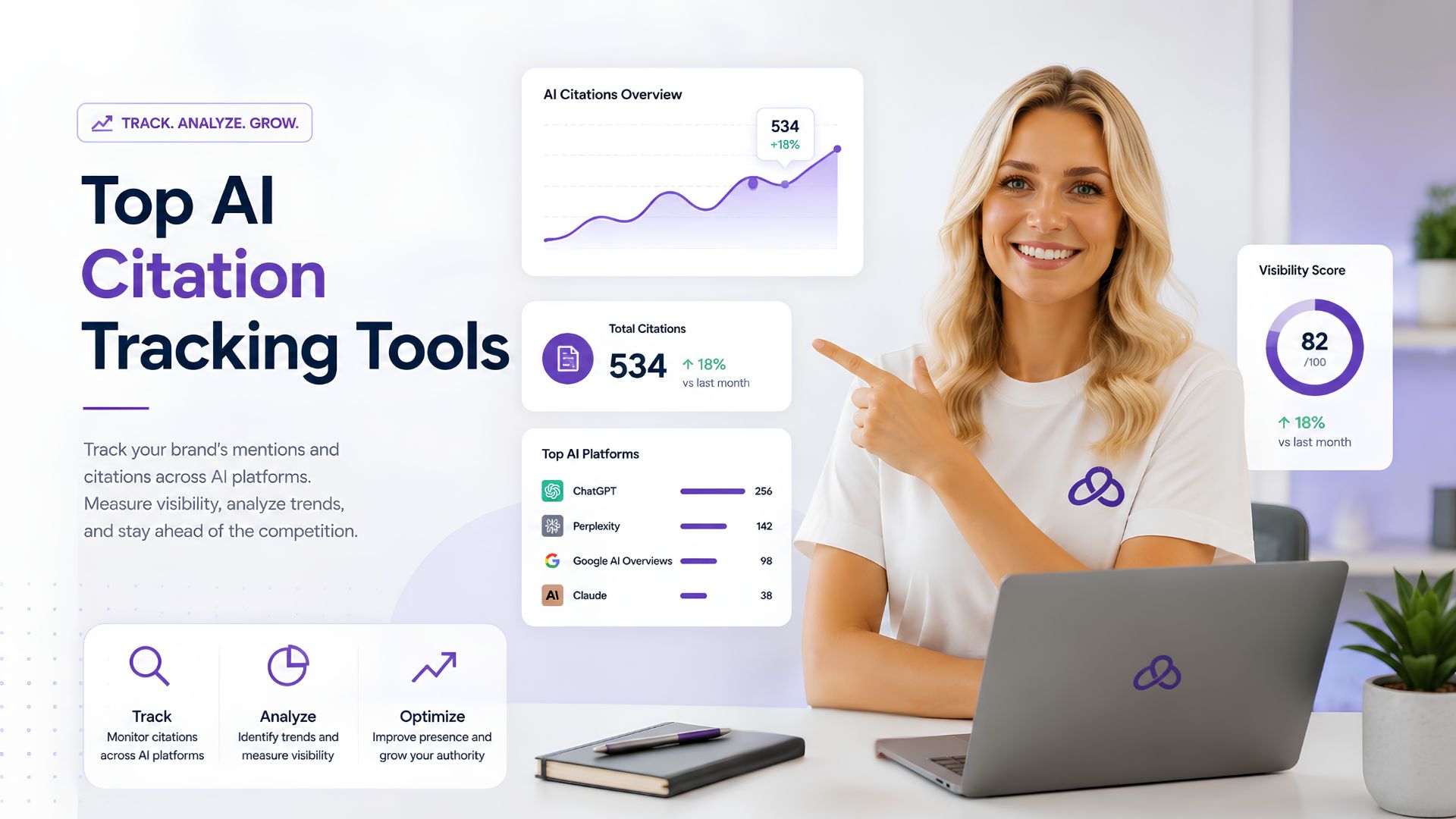
ToggleSeven AI citation tracking tools compared across citation source analysis, platform coverage, accuracy, and pricing, to help brands measure which sources drive their AI mentions and how to earn more of them.
Quick Filters:
ToggleWhat Is AI Citation Tracking and Why Does It Matter?
AI citation tracking is the practice of monitoring which external sources AI engines reference when generating answers that mention your brand. It is a distinct discipline from AI rank tracking. Rank tracking tells you whether your brand appeared. Citation tracking tells you why, and that distinction is what makes it actionable.
The Citation Layer Drives Everything
The research on AI citation patterns is clear and consistent. Muck Rack’s December 2025 analysis found that 94% of generative AI citations came from non-paid, earned sources. Brands are 6.5x more likely to be cited through third-party sources than through their own domains. Furthermore, only 12% of AI-cited links rank in Google’s top 10, meaning 88% of citations come from a layer traditional SEO tools cannot monitor. Consequently, a brand can be invisible to AI engines despite holding strong organic rankings, and a brand with modest SEO authority can dominate AI search if the right third-party sources cover it.
Citation Drift Makes Continuous Tracking Essential
The challenge is compounded by citation volatility. Research tracking 240 million ChatGPT citations found that 40 to 60% of cited domains change month to month, and over six months, 70 to 90% of cited domains are completely different from where they started. As a result, a one-time citation audit tells you almost nothing about current AI brand presence. Systematic AI citation tracking is therefore the only way to maintain a reliable picture of what is driving your visibility, and what has dropped out.
What AI Citation Tracking Tools Must Cover
Effective AI citation tracking tools measure four things. First, which specific URLs AI engines link to when mentioning your brand. Second, which source categories drive those citations, review sites, news publications, industry directories, social platforms, or owned assets. Third, how citation patterns differ by AI engine, since only 11% of domains are cited by both ChatGPT and Perplexity. Fourth, how citation sources change over time, making drift detection a core feature rather than an afterthought. The seven tools below cover that full range.
1. Cognizo
Cognizo is the most complete AI citation tracking platform on the market, because it connects citation data to organic AEO strategy, content production, and paid AI visibility in a single workflow. Where most tools stop at telling you which sources are cited, Cognizo tells you what to do about it and lets you act on that insight without switching platforms.
Citation Source Intelligence
Answer Engine Insights is Cognizo’s core citation tracking module. It monitors brand share of voice, sentiment, topical authority, and citation sources in real time across ChatGPT, Google Gemini, Google AI Overviews, Google AI Mode, Perplexity, Microsoft Copilot, Meta AI, Claude, Grok, and DeepSeek, broken down by model, topic, prompt, and region. This gives teams a clear distinction between owned citations, where the AI links directly to your domain, and earned citations, where a third-party source carries the mention, the two citation types that matter most for AEO strategy.
Content and Revenue Action Layer
Content Optimization turns citation gaps into a prioritized action list, complete with automated briefs, outlines, drafts, and FAQ generation, plus technical audits that check whether your site is actually crawlable by AI bots before a content fix is even worth making. AI Traffic Analytics closes the loop other citation tools leave open: it connects crawler behavior from GPTBot, ClaudeBot, and OAI-SearchBot to real GA4 session and conversion data, so citation improvements can be tied to revenue rather than just visibility scores. Prompt Volumes shows what buyers are actually asking AI models before competitors catch on, and ChatGPT Ads is the only module in this category that pairs organic citation tracking with paid ChatGPT advertising, giving teams a unified view of competitor ad copy and unified attribution through the OpenAI Conversions API.
The results speak for the approach: Hat Club used Cognizo’s combined organic and paid AEO strategy to drive 20x revenue growth in AI-driven sales.
Pricing:
- Core: $149/month (annual), 3 platforms, 50 prompts, 4,500 responses/month, 2 content articles/month, unlimited seats and regions, competitor tracking
- Growth: $499/month (annual), 5 platforms, 150 prompts, 22,500 responses/month, 5 content articles/month, ChatGPT Ads integration, AI Traffic Analytics for 1 domain, live chat support, quarterly strategy reviews
- Enterprise: custom, 10+ platforms, dedicated AEO strategist, SSO/SAML, API access, MCP export, Google Search Console integration
Best for: B2B SaaS teams tracking AI-driven visibility, in-house marketing and content teams that need citation fixes turned into action, agencies managing AEO across multiple client accounts, and enterprise brands that want citation tracking, content production, traffic attribution, and paid AI visibility in one platform instead of stitching together several point solutions.
2. Trakkr
Trakkr is an AI citation tracking tools available, covering eight AI models, ChatGPT, Claude, Gemini, Perplexity, Grok, Meta AI, DeepSeek, and AI Overviews, with daily citation source analysis.
Citation Source
It maps the citation ecosystem behind your AI brand presence, specifically showing which external domains AI engines reference when mentioning your brand, categorized by source type including reviews, news, social, and other categories, with top-cited domains ranked by frequency.
Per-model citation breakdowns reveal how citation sources differ across platforms. This matters because ChatGPT, Gemini, Perplexity, and Grok draw from different source pools, a Reddit thread might drive citations on one platform while an industry publication drives them on another. Understanding those differences is the basis of any intelligent citation strategy.
Drift Detection and Action Layer
Track monitors citation performance daily with trend data for 7, 14, and 30-day windows, enabling citation drift detection over time. Improve synthesizes citation data weekly into a prioritized action list with projected impact scores and execution playbooks. Technical fixes can be applied automatically. In addition, Google Analytics integration attributes revenue by AI source, connecting citation improvements to measurable business outcomes.
Pricing:
- Growth: $79/month ($66/month annually), 1 brand, 50 prompts, all 8 models, daily refresh, citation tracking, 25 article credits/month, 3 alerts, CSV export, 1-year history, 14-day free trial
- Scale: $399/month ($331/month annually), 10 brands, 50 prompts each, unlimited seats, white-label, API and MCP, 100 article credits/month, unlimited alerts
- Extra brand: $39/month; extra 50 prompts: $39/month
Best for: Marketing teams and agencies that need multi-engine AI citation tracking with drift detection, source categorization, and a free entry point.
3. Profound
Profound offers citation tracking feature in the enterprise category. Its 680-million-citation database and 15-million-daily-prompt monitoring infrastructure go well beyond what any startup tool can match.
Citation Pattern Analysis at Scale
Answer Engine Insights tracks citation frequency, cited URL, mention position, and sentiment across up to 10 AI engines on Enterprise. Profound’s analysis of 680 million citations across ChatGPT, Google AI Overviews, and Perplexity revealed distinct citation patterns by platform.
Crawler-Level Citation Intelligence
Agent Analytics tracks how AI crawlers, GPTBot, ClaudeBot, OAI-SearchBot, interact with your website. It shows which specific pages they access and how frequently, bridging the gap between what AI crawlers read and what they ultimately cite. Consequently.
Content Agents for Citation Building
Profound Agents generate AEO-optimized content, produce FAQ pages, and identify which third-party publications would most improve citation authority based on current gap analysis. Prompt Volumes (Enterprise only) reveals what real users are actually asking AI engines, enabling citation strategies built around genuine buyer queries rather than assumed prompts.
Pricing:
- Starter: $99/month, ChatGPT only, 50 prompts, 1,500 responses/month, 100 agent credits, 1 seat, no export
- Growth: $399/month, 3 engines, 100 prompts, 9,000 responses/month, 400 agent credits, 3 seats, CSV export
- Enterprise: custom, up to 10 engines, Prompt Volumes, API, SSO/SAML, SOC 2 Type II
- No free trial; no self-serve; 1–3 week onboarding
4. Peec AI
Peec AI is a purpose-built AI citation tracking platform that uses UI scraping technology rather than API queries. As a result, it captures the actual sources a real user sees cited in AI responses, not API-layer data that may differ from the live interface. For citation tracking specifically, this distinction matters, the sources a buyer sees are the ones shaping their perception.
Source Attribution and Sentiment
The Sources module is the core citation tracking feature. It shows which external URLs AI engines reference when mentioning your brand, filterable by source category including reviews, news publications, social platforms, and other types. Trend data shows how citation sources change over time, enabling drift detection across tracked platforms.
Attribute-level sentiment tracking adds a dimension most citation tools lack: it monitors how cited sources are framing your brand’s specific attributes, pricing, support quality, integration depth, not just whether they appear positively overall. Consequently, citation tracking becomes brand intelligence rather than a simple URL count.
Multi-Engine and Multi-Country Coverage
Available models include ChatGPT, AI Mode, AI Overviews, Microsoft Copilot, Perplexity, Gemini, and Grok. Multi-country and multi-language citation tracking is available on Advanced plans. For brands managing citation strategy across multiple markets, therefore, Peec AI enables comparison of which sources drive AI citations differently by region.
Pricing:
- Starter: €85/month, 50 prompts, 3 models, unlimited users, daily tracking, 1 project, free trial
- Pro: €205/month, 150 prompts, 3 models, 2 projects
- Advanced: €425/month, 350 prompts, 3 models, 5 projects, multi-country, Looker Studio
- Enterprise: custom, all models, unlimited projects, API, SSO
- Additional model: €30–€140/month
5. SE Ranking + AI Search Add-on
SE Ranking extends its full SEO platform into AI citation tracking via its dedicated AI Search Add-on. For teams already using SE Ranking for backlink analysis and competitive research, this integration adds AI citation data without a new tool or workflow.
Page-Level Citation Tracking
AI Results Tracker records the specific citation URLs that AI engines reference when mentioning your brand across Google AI Overviews, Google AI Mode, ChatGPT, ChatGPT Search, Gemini, and Perplexity. This page-level citation data is directly actionable, it shows exactly which assets are earning AI citations and which are not, enabling content teams to double down on what works and fix what does not.
Competitor AI Research shows which pages and sources earn citations for competing brands, surfacing the citation gap between your brand and rivals. Consequently, teams can identify which third-party publications cover competitors but not you, the highest-leverage citation building opportunities. For a broader view of AI search monitoring capabilities beyond citation tracking, see AI search monitoring tools.
SE Visible provides a standalone strategic dashboard for AI citation scores and net sentiment, designed for executive-level reporting without requiring access to the full SE Ranking platform.
Pricing:
- Core: $103.20/month (annually), 100 AI prompts daily, 5 GEO domains
- Growth: $223.20/month (annually), 250 AI prompts daily, 15 GEO domains, historical data
- AI Search Add-on: +$71.20/month (annually), 200 additional prompts, AI Results Tracker, unlimited competitor research
- SE Visible standalone: from $189/month
- 14-day free trial, no credit card required
6. Semrush AI Visibility Toolkit
Semrush offers AI citation tracking as part of its dedicated AI Visibility Toolkit, available standalone or bundled in Semrush One. For teams already inside the Semrush ecosystem, therefore, adding citation tracking requires no new platform or login.
Citation and Source Reports
Brand Performance tracks weekly AI platform responses to synthetic prompts across ChatGPT, Google AI, Gemini, and Perplexity. It reports cited pages, the specific URLs AI engines link to when referencing your brand, alongside mentions, Share of Voice, and Sentiment in the same report. This combination gives teams a complete picture of citation performance without needing separate dashboards.
AI Search Site Audit identifies technical issues that prevent AI crawlers from accessing your content. This is foundational for citation tracking improvement: content AI crawlers cannot read cannot be cited, regardless of how authoritative the domain is. Furthermore, Prompt Research identifies high-volume AI prompts by topic and intent, helping teams understand which query categories should anchor their citation building strategy.
Pricing:
- Base: $99/month per domain (annually), 25 prompts daily, cited pages report, 4 AI platforms, no free trial
- Additional user: from $45/month; additional domain: $99/month
- Semrush One Starter: $199/month, 5 sites, 50 prompts
- Semrush One Pro+: $299/month, 15 sites, 100 prompts
- Enterprise: custom, adds Grok, Claude, ROI attribution
7. Manual Tracking
Manual citation tracking means opening AI platforms directly, entering target queries, and recording which sources are cited in the responses. It requires no setup and no subscription. Consequently, it is the default starting point for teams beginning to understand their AI citation footprint.
Where Manual Citation Tracking Works
The advantage is directness. Manually reviewing a small prompt set gives you the exact citation URLs a real user would see, including the anchor text, the context in which a source is referenced, and whether it supports a positive or negative brand framing. Moreover, this is useful for investigating a specific citation shift flagged by an automated tool or for understanding how a new AI platform cites your category.
The Limits of Manual Tracking
However, manual citation tracking cannot function as a systematic monitoring method. Citation drift means that sources change 40–60% month over month, making any snapshot rapidly outdated. In addition, running comprehensive citation checks across seven platforms manually takes hours. Furthermore, manual tracking only covers the queries you already know to test. For a complete citation map, see tools to track share of voice in AI search, which covers how citation data connects to broader share of voice measurement.
Pricing: Free.
Best for: Initial citation audits, qualitative investigation of specific AI responses, and zero-budget validation.
Summary: AI Citation Tracking Tools Compared
Quick Comparison Table
| Tool | Starting Price | AI Platforms | Citation Features | Citation Attribution Depth |
|---|---|---|---|---|
| Cognizo | $149/month | ChatGPT, Google Gemini, Google AI Overviews, Google AI Mode, Perplexity, Microsoft Copilot, Meta AI, Claude, Grok, DeepSeek | Owned vs earned citation tracking, GA4 traffic attribution, ChatGPT Ads | Owned/earned split tied to GA4 revenue and conversions per source |
| Trakkr | Free / $79/month | 8 models | Citation source categorization, drift detection, query-level data | Source-type categorization |
| Profound | $99/month (ChatGPT only) | Starter: 1 / Growth: 3 / Enterprise: up to 10 | 680M citation database, crawler analytics, cited URL tracking | Crawler-to-citation mapping |
| Peec AI | €85/month | 3 models from 7+ | UI-scraped source attribution, attribute sentiment, multi-country | Source-level sentiment |
| SE Ranking + AI Add-on | $103.20/month + $71.20/month | AI Overviews, AI Mode, ChatGPT, ChatGPT Search, Gemini, Perplexity | Page-level citation URLs, competitor citation gaps | Page-level URLs |
| Semrush AI Visibility | $99/month per domain | ChatGPT, Google AI, Gemini, Perplexity (Grok + Claude: Enterprise) | Cited pages report, SOV + Sentiment, Site Audit | Cited-page list |
| Manual Tracking | Free | Any (manual) | Raw citation URLs only, no trend data | Raw URLs only |
Platform Summaries
- Cognizo, is the strongest overall pick because it is the only platform here that turns citation data from 10 AI models into content fixes, connects those fixes to real GA4 revenue, and adds a paid ChatGPT Ads layer on top of organic tracking.
- Trakkr, citation tracking across all 8 models. Growth at $79/month with daily citation source analysis, source categorization by type, drift detection, and GA4 revenue attribution. Scale at $399/month for agencies.
- Profound, enterprise AI citation tracking from $99/month (ChatGPT only) to custom Enterprise (up to 10 engines, 680M citation database). Includes crawler analytics, content agents, and Prompt Volumes on Enterprise. No free trial.
- Peec AI, citation tracking platform from €85/month. UI-scraped source data, attribute-level sentiment on citations, multi-country tracking, free trial available.
- SE Ranking + AI Search Add-on, citation tracking from $103.20/month plus $71.20/month (annually). Page-level cited URL data across 6 AI surfaces, competitor citation gap analysis. SE Visible from $189/month. 14-day free trial.
- Semrush AI Visibility, $99/month per domain. Cited pages report alongside SOV, Sentiment, and Site Audit. 4 AI platforms, 25 prompts daily. Grok and Claude at Enterprise only. No free trial.
- Manual Tracking, free. Useful for initial citation audits and zero-budget spot-checks. Not viable as a systematic AI citation tracking method.